Latest
Explore
Path
Shoe Reviews
Practical assessments of comfort, fit, materials, and everyday performance across footwear
Path
Sizing & Fit
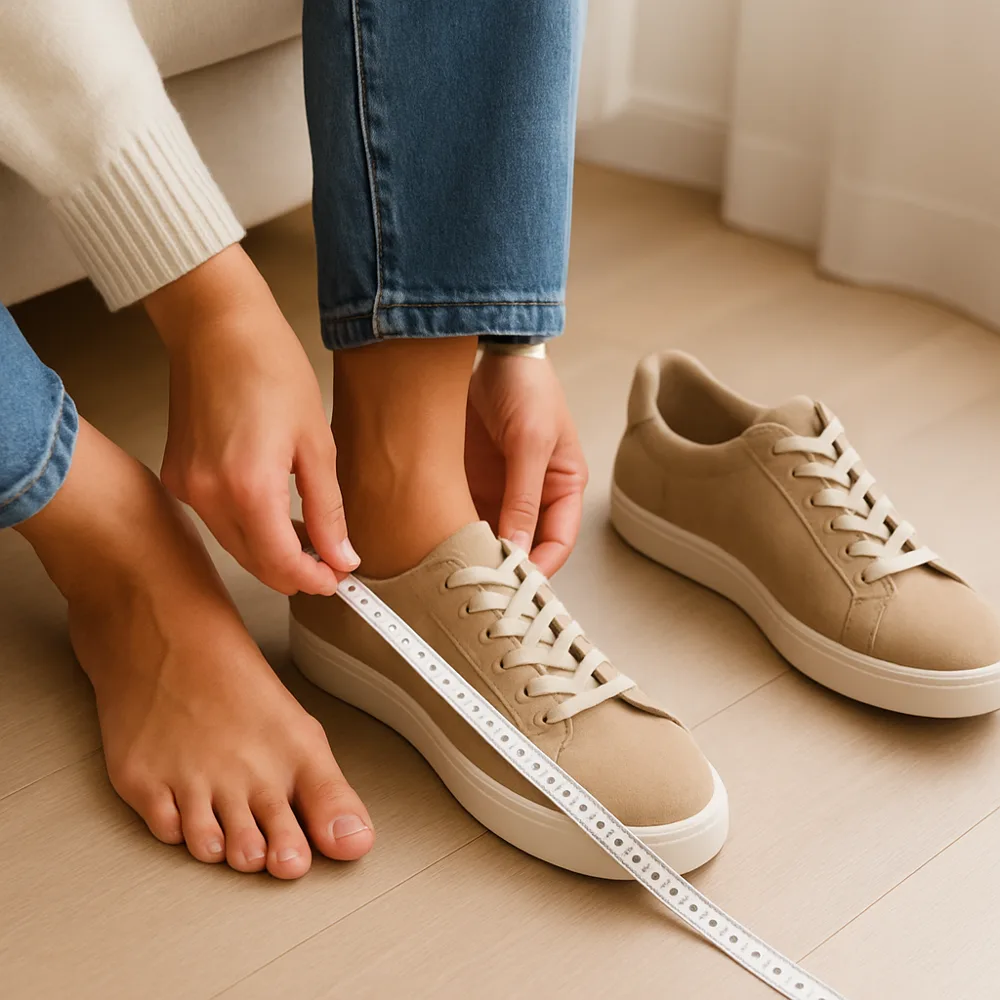
Clear guidance for measuring your feet, choosing a size, and solving common fit problems.
Path
Style Guides
Wearable ideas for pairing shoes with outfits, seasons, and different occasions.
Path
Care & Wear
Straightforward advice for cleaning, maintaining, and getting more use from your shoes.
Nearby places
All venues

A Quick Fit Checklist Before You Buy Running Shoes
A running shoe that feels fine for a minute in the shop can feel very different at the five-kilometre mark. Feet swell slightly as you run, your stride loads the shoe repeatedly, and small pressure points turn into blisters. A few simple checks make it much more likely that a pair will still feel right on your longest runs.
Check the length with your thumb
Stand up, with your weight evenly on both feet, and press down at the front of the shoe. Most runners do well with roughly a thumb's width of space between the longest toe and the end of the shoe. Your longest toe is not always the big toe. Too little room can lead to bruised toenails on downhills. Too much, and your foot slides forward and the shoe feels sloppy.
Look at width, not just size
The widest part of your foot should sit comfortably at the widest part of the shoe, without the upper bulging over the sole. If the sides pinch or your little toe rubs, try a wider version before you go up a size. Going longer to gain width usually throws off where the shoe flexes. Our guide to signs shoes are too narrow covers the warning signs in more detail.
Secure the heel
Walk briskly or jog a few steps. Your heel should lift very little, if at all. If it slips, try lacing through the top eyelet to form a heel lock before you rule the shoe out. Some heel shapes simply suit some feet better than others.
Test at the right time and in the right socks
- Try shoes later in the day, when your feet are closer to their running size.
- Wear the socks you actually run in, as thickness changes the fit noticeably.
- Fit the larger foot, since most people have one foot slightly bigger than the other.
Sizes vary between brands and even between models from the same brand, so treat the number on the box as a starting point rather than a rule. If you haven't measured recently, it helps to measure your feet at home first. A well-fitting running shoe should feel comfortable almost straight away. Don't count on a long break-in period to fix a poor fit.