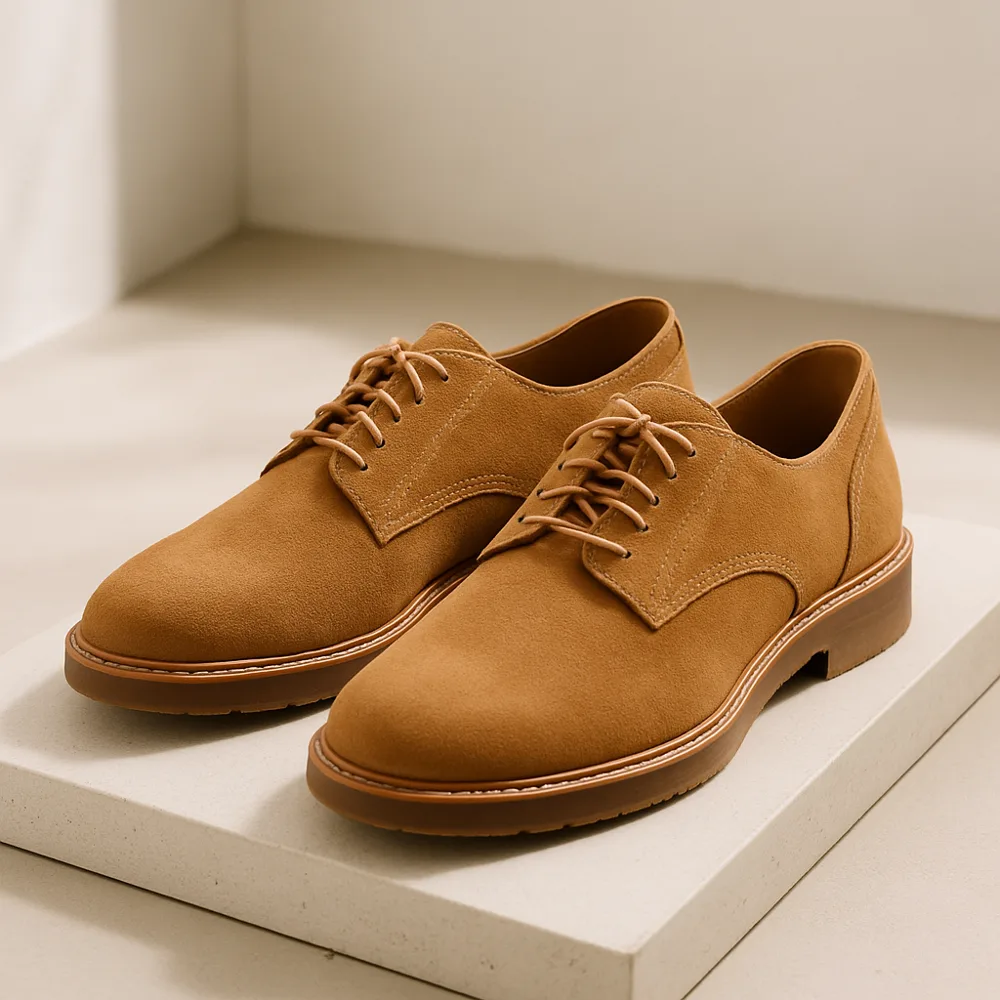
Some footwear feels slightly stiff at first as materials flex and soften, but new shoes should not cause sharp pain or persistent pressure. A gentle adjustment period is different from forcing your feet to adapt to a poor fit. If toes are cramped, the heel slips badly, or a seam rubs in one spot, the shoe may be the wrong shape or size.
Start with short periods of wear at home, then gradually extend the time if the shoes remain comfortable. Check for hot spots after each session. For leather footwear, natural flexing may make the upper feel less rigid, but the shoe will not reliably become longer or wider. Avoid aggressive stretching methods unless the material and construction are suitable.
Fit the shoes with the socks you plan to wear. Adjust laces or straps to secure the foot without creating pressure. A heel that moves slightly may settle with different lacing, while repeated rubbing can point to a mismatch between your heel and the shoe's shape.
Follow the return policy before wearing new shoes outdoors. Stop using them if discomfort grows, and do not assume pain is a necessary part of getting comfortable. The right pair should feel wearable from the beginning, even if its materials become more flexible over time.