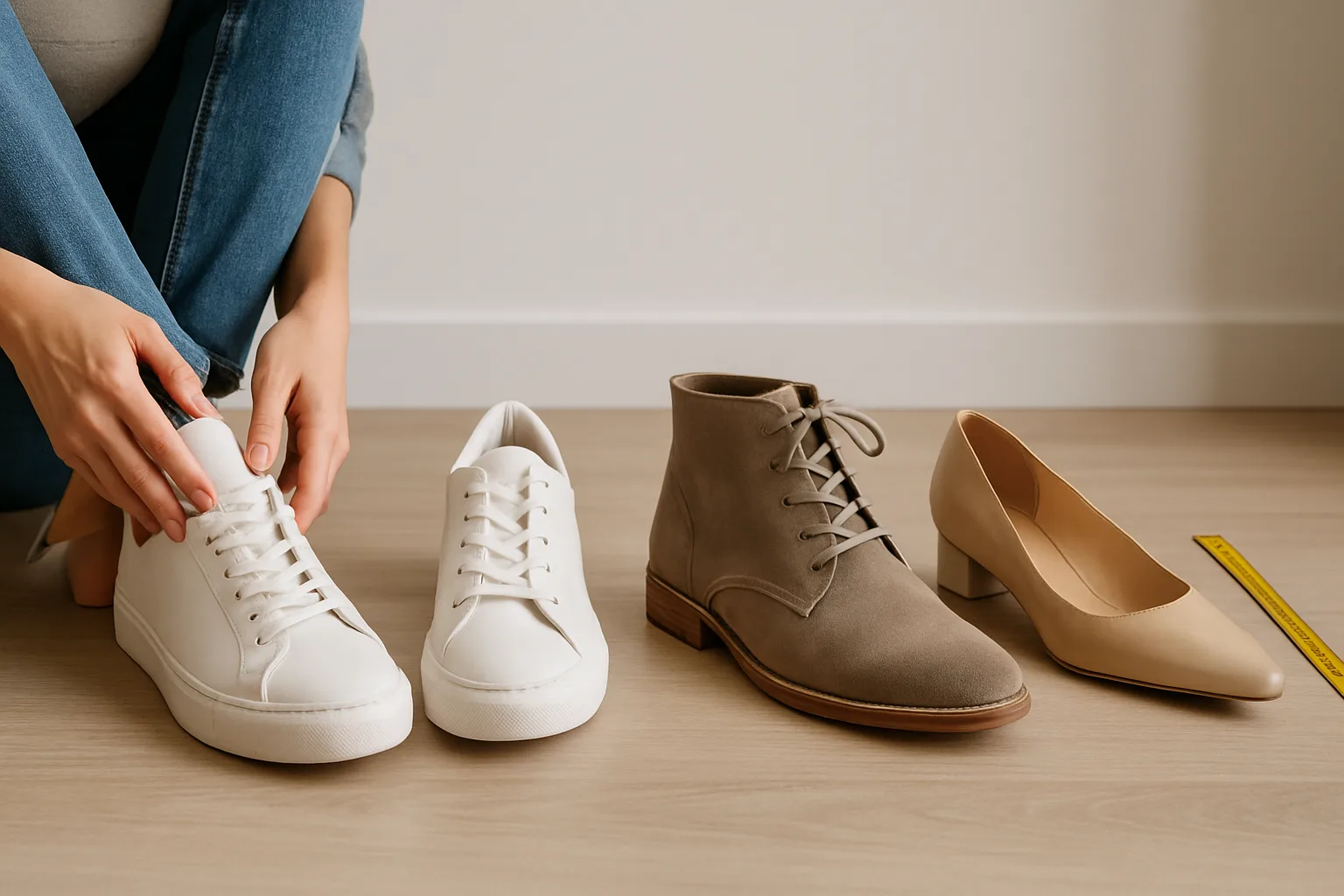
Start by removing surface dust with a soft brush or dry cloth. For ordinary dirt, use a slightly damp cloth and gentle pressure, testing a small hidden area first. Leather finishes differ, so avoid soaking the shoe or applying a cleaner without checking that it is suitable for the material. Remove laces if you want easier access to the tongue and eyelets.
If the shoes get wet, blot away moisture and let them air-dry at room temperature. Keep them away from direct heat, which can dry or distort leather. Shoe trees or loosely packed paper can help the shoes hold their shape as they dry; replace damp paper as needed. Do not store wet shoes in a sealed container.
Conditioning can help some leather remain supple, but more is not always better. Follow product directions and test first, since conditioners may change the color or finish. Polishing is mainly useful for improving appearance and adding a light protective layer. Choose products designed for the type and finish of leather you own.
Let shoes rest between wears when possible, and store them in a cool, dry place away from prolonged sunlight. Rotate pairs so each has time to air out. For delicate finishes, major stains, or construction concerns, a shoe-care professional may be safer than experimenting with strong household products.