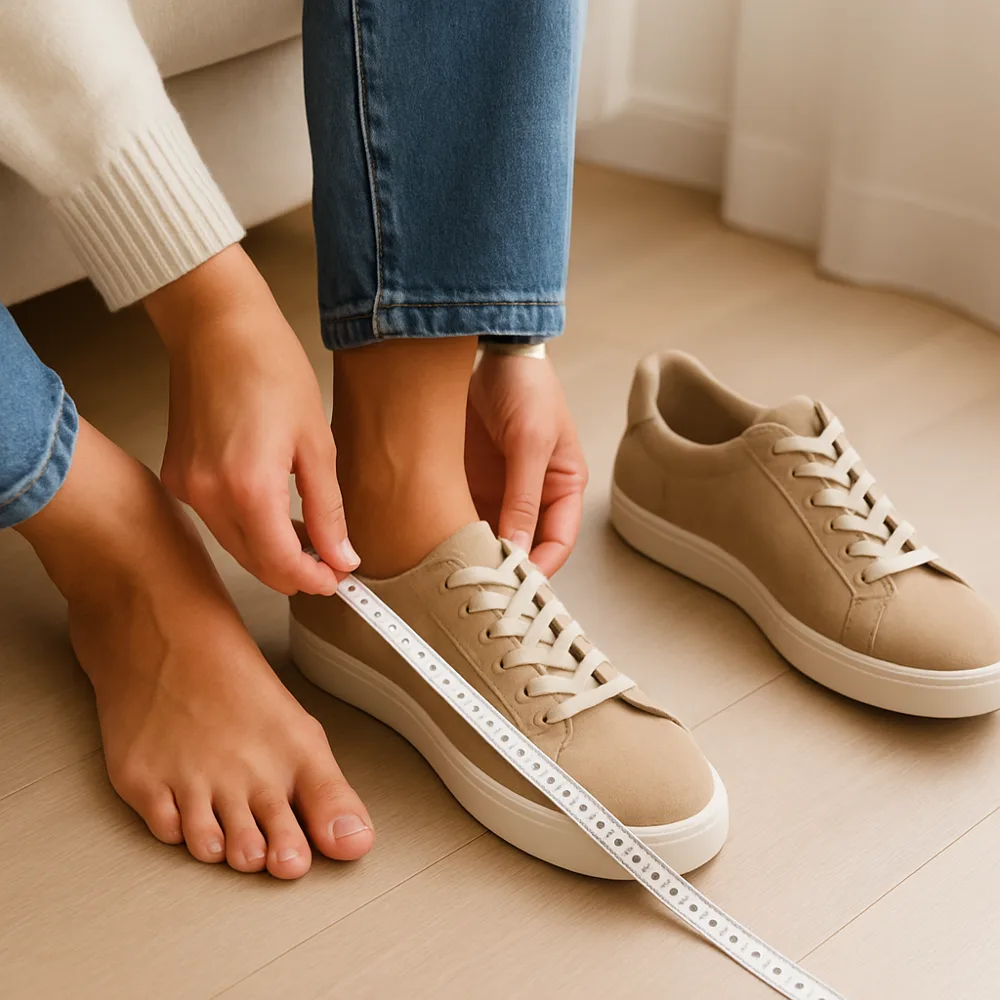
Toe crowding is one of the clearest signs that a shoe may be too narrow. Your toes should be able to rest naturally rather than overlap, curl, or press against the sides. Red marks along the forefoot after a brief try-on can also signal that the upper or sole shape is not giving your foot enough room.
Pay attention to pressure across the ball of the foot and along the little-toe side. A snug feeling can become more noticeable as feet warm and swell during activity. Numbness, tingling, or a burning sensation are reasons to stop and reassess, not discomfort you need to overcome through a long break-in period.
Try a wider option or a different model with a roomier toe box. Some shoes have a broad-looking upper but a narrow platform, so judge the interior feel as well as the exterior appearance. Changing socks or adjusting laces may ease pressure on top of the foot, but those steps will not add meaningful width to the sole.
Width labels vary between makers, and a wider size may also be longer. Try both feet while standing and walk for several minutes. If the shoe still squeezes or causes symptoms, choose a different shape. Persistent foot discomfort is worth discussing with a health professional.